

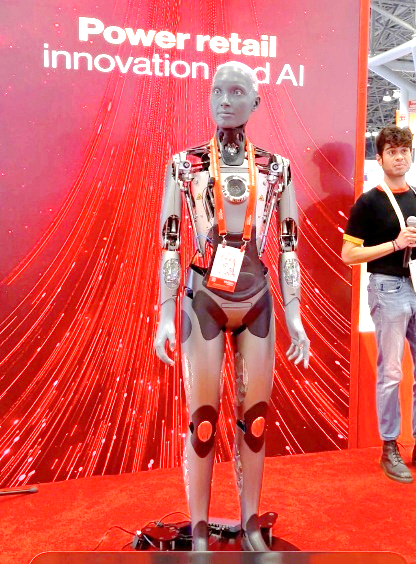
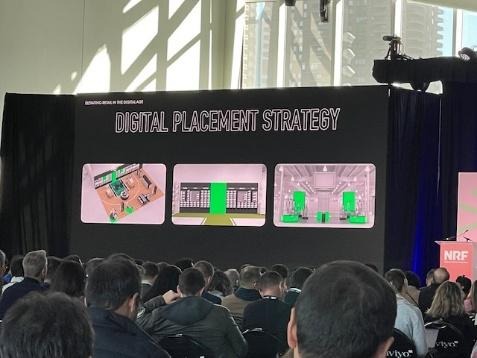
Technology has always enabled innovation, but this year’s NRF Big Show has demonstrated a new AI native consumer that will reshape the retail industry from the inside out. With over 40,000 attendees, 6,500 brands, 185 sessions and 100 countries, NRF 2026 did not disappoint. Retailers from around the world converged on the Javits Center, NYC to share, explore, source and learn about all things retail. Despite claims that retail is becoming more irrelevant, a $5.3 trillion GDP contribution proves otherwise. Consumers may be engaging with products and brands differently, but retail remains a powerhouse segment within the global market.
From January 11-13, industry leaders flooded the aisles of the convention center discussing topics from supply chain automation to digital store technology and AI/Robotics adoption. Not since the emergence of e.commerce has retail been at the cusp of such innovation and discovery. Regardless of channel, category or position, one thing was clear: 2026 IS THE YEAR OF AGENTIC AI.
According to AI itself, agentic AI is defined as:
Autonomous artificial intelligence systems that can independently set goals, plan, reason and take actions to achieve objectives with minimal human intervention, going beyond simple command-response models by interacting with tools and the environment. These systems use large language models (LLMs) and other AI components to understand complex tasks, break them into sub-tasks, use external tools and adapt their strategies.
Unlike last year’s NRF show that spoke about AI , this year was dominated by panelists, speakers and vendors who are implementing AI.
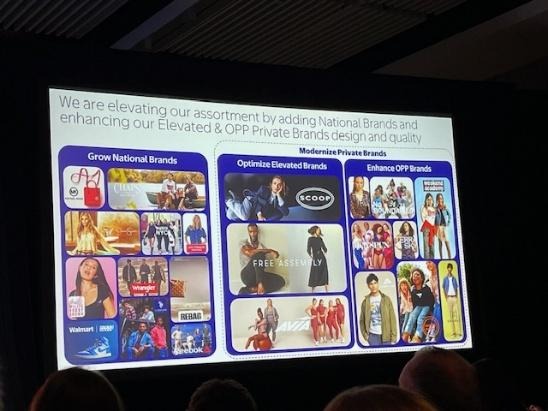
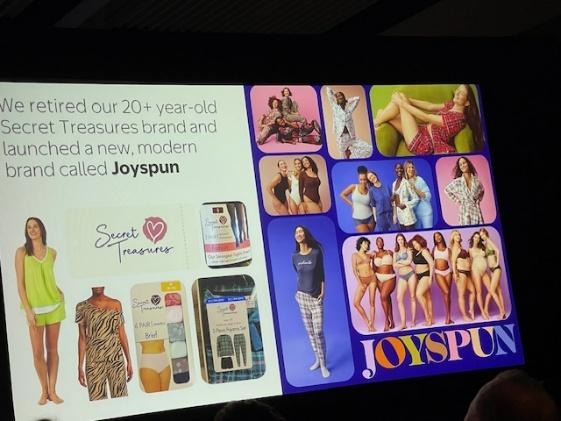
At the frontline of retail innovation is Walmart, who announced their partnership with Google Gemini to usher in a new way for shoppers to find and buy products. The brand has been leveraging AI across their enterprise and has been employing robots via voice and computer vision to enhance the operations of their stores. Not to be outdone, Walmart’s massive store footprint also continues to innovate around retail fundamentals as shared by Executive Vice President of Fashion for Walmart US, Denise Incandela. The brand took the approach that price, alone, does not make value in the consumers’ eyes. Incandela and team launched, relaunched and retired 10 brands over the last 5 years, identified and filled the $15-$40 white space voice within their merchandising assortment and worked with teams to visually elevate the way in which fashion is presented in 1,000+ doors.
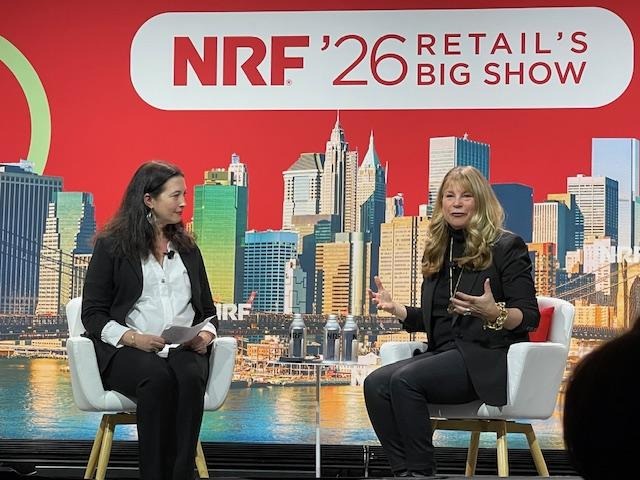
Other notable retailer innovation was displayed by Dick’s Sporting Goods who spoke about their impressive reinvention through The House of Sport. Large format stores built for retail, experiences and services. According to Executive Chairman, Ed Stack, the team sought out to “build a store that would put Dicks out of business.” Now 35 strong, the new fleet of experiential stores is planned to expand to 75-100 locations.
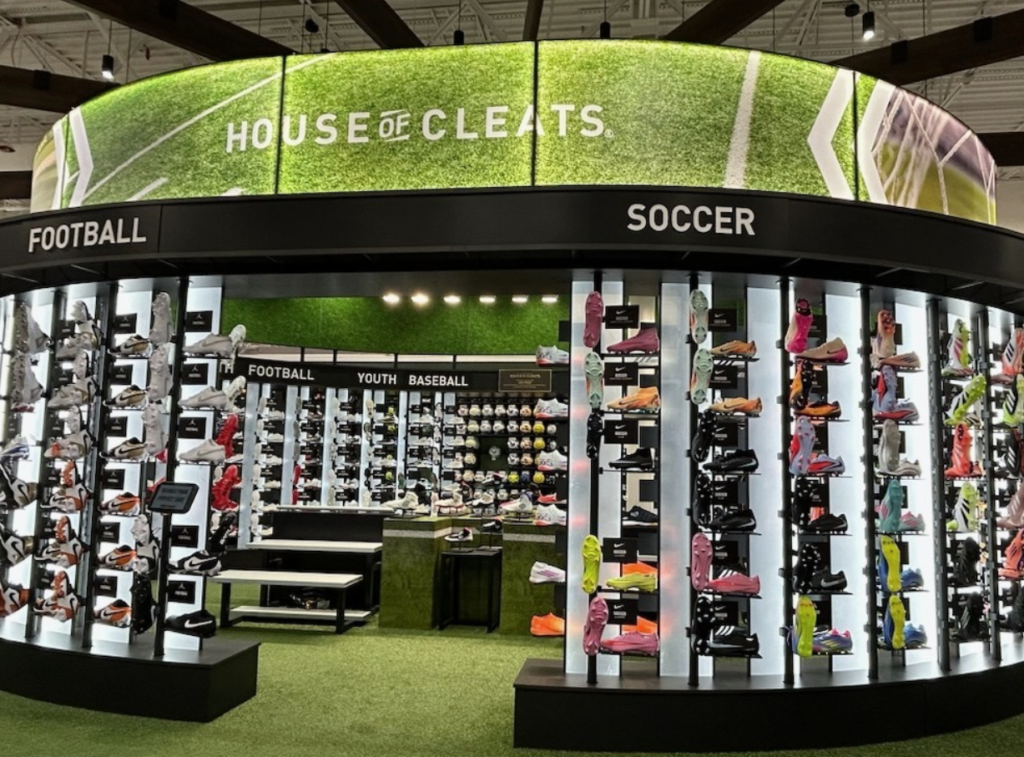
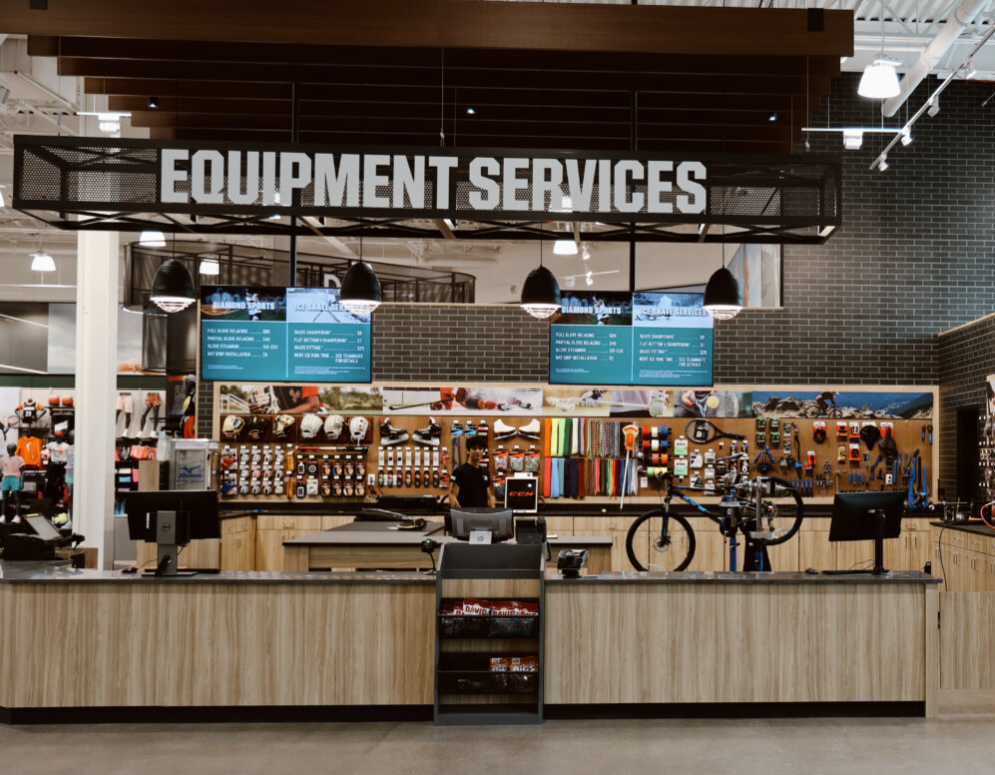
In addition to assortments, activities (like golf simulators and actual playing fields), the retailer is enlisting the use of immersive visuals to enhance personalized experiences throughout the store.
Dicks believes that AI will “change the world,” but for now is using it as a productivity tool and, like Walmart, sees AI/robotics as a hybrid approach of HUMAN+ to serve their customers better.
AHH HAA HEADLINE OF THE SHOW…
Innovative stores, enhanced commerce, integrated technology and AI-driven solutions were definitely woven through the show’s conversations, but the ahh haa moment came during the Loews/Abercrombie & Fitch panel. Executives from both brands stated what should be the obvious, as consumers engage more with agentic AI/conversational commerce, product search and discovery need to pivot and become Symantec not just keyword driven. With over 60% of online searches now leading with an AI overview, large language models are playing critical new roles in elevating product visibility.
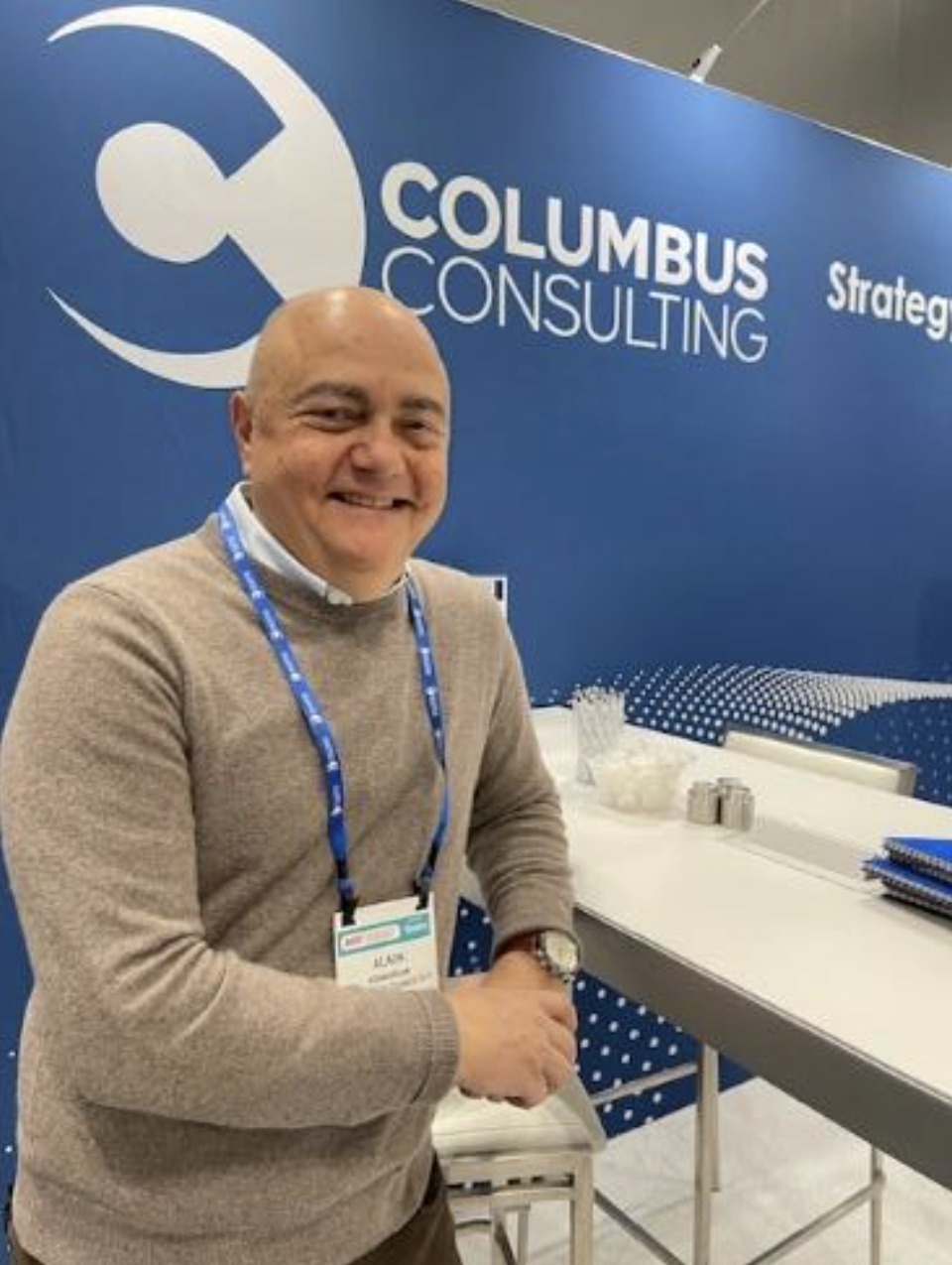
According to Alain Krakirian, Managing Partner at leading retail consulting firm, Columbus Consulting, “I’m excited about agentic AI and how it can enhance a retailer’s efficiency and productivity. Some clients are using AI as an accelerator and are looking for applications that truly solve business challenges and allow for a better customer experience. We are seeing a lot of brands embracing AI solutions in the planning and allocation space to be more accurate and enable faster decision making, streamlining processes and driving profit. The challenge retailers have is around not being ‘AI-ready’ in that their data is not optimized for large language and conversational engagements. They also are looking for ways to properly evolve their organizational structure and create new role definitions as AI absorbs task-oriented work.”
The topic around being ‘AI ready’ is one currently being addressed by many in the industry. Commerce is pivoting from SEO-driven inquiry (search engine optimization, aka, key words) to GEO-driven inquiry (generative engine optimization, aka, real language communication).
Like many other technology innovations in the retail space, no brand is doing it better than Ralph Lauren.
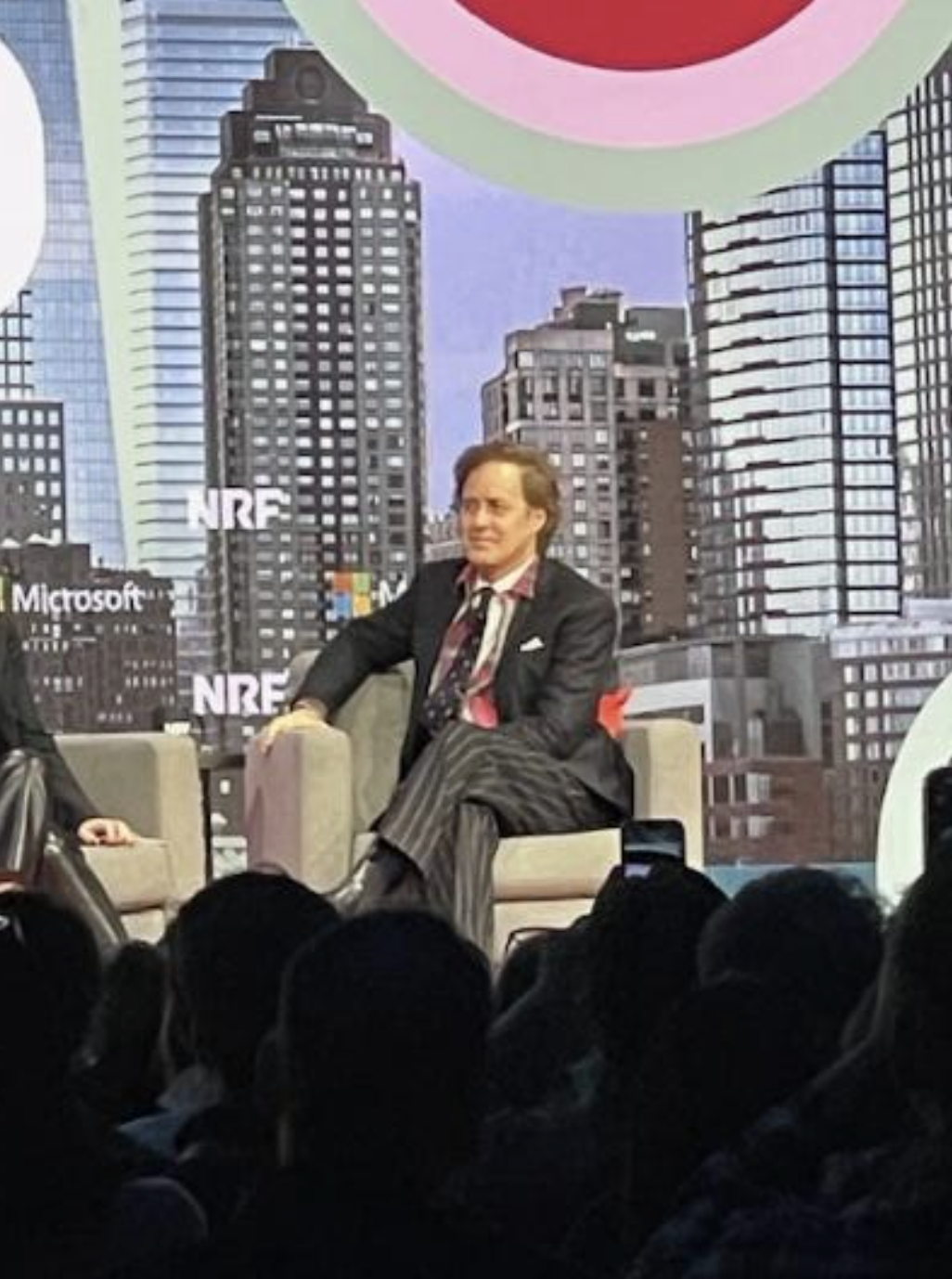
During his panel discussion, David Lauren, Chief Branding and Innovation Officer at Ralph Lauren, alongside of Shelley Bransten, Corporate VP Worldwide Industry Solutions at Microsoft, shared the brand’s agentic AI agent only available on the brand’s app. Ask Ralph is a conversational commerce-driven chat function that is enabled by true language, taking not just product attributes into the logic, but real-life use and style needs. Consumers can engage with the app by asking “Ralph” what his recommendations are for specific fashion or wardrobe scenarios. The difference is substantial, shifting from keywords like yellow, cashmere, sweater to language like I need something to wear to a Sunday brunch with professional colleagues. Ultimately the resource will evolve with learnings powered by agentic AI so that the recommendations will be based on style, fit, preferences and behaviors on an individual level. According to Lauren, “this technology takes the philosophy of Ralph Lauren and brings it to a new generation.”
Over two years in the making, the Ask Ralph app chat has yielded some key learnings. According to Bransten, Microsoft has identified 5 headlines from this project:
- AI is about business transformation
- AI is only as good as the data it is using
- Having a culture of innovation is critical
- Users of AI need to be responsible for the technology applications and governance/management
- Picking the right AI partners is pivotal to success
Designer brands like RL were not the only celebrities present at the show, Keynote session, The New Rules of Brand Building, invited actor, producer and business entrepreneur, Ryan Reynolds to the main stage. From Aviation Gin and Mint Mobile to Wrexham A.F.C and his creative agency Maximum Effort, Ryan shared his views on modern day brand building in the fast-paced social media and streaming world within which we now live.
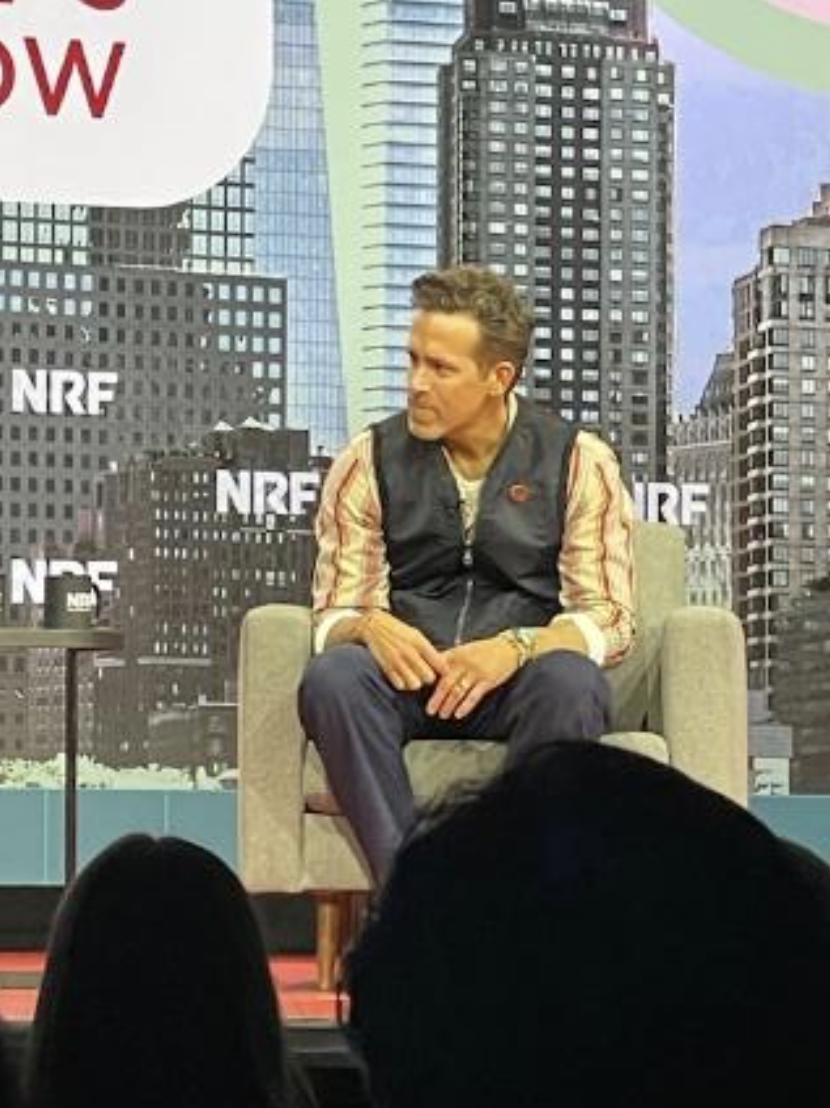
Reynolds is a firm believer that brands need to be part of the conversation. His approach to marketing is simple, build a brand with humor and authenticity. He pronounced that time and money can kill creativity but that emotional investments in a product/company/brand Trumps financial investments every time. Critical to consumer messaging is to be relevant now…not in 6 months from now. His creative agency focuses on being fast and agile and leverages his unique sense of wit and commentary (think his Mint Mobile commercials). The one critical piece of advice offered: be short, be clear, be simple with your messaging. Enough said.
With three full days of content, exhibits and demonstrations, NRF 2026 will dominate the industry conversation this week. The industry remains optimistic. Even economists are somewhat bullish on retail. While tariffs created hesitancy last year, consumers are still consuming. Overall US consumer spending is strong, driven more by upper income market segments and moderate inflation (2-4%). The one caution being expressed is the uncertainty rising around debt acquisition, interest rates and the slower growth of job creation and both skilled and trade/manufacturing labor force.
Regardless of which sessions you attended or what retail areas you were most interested in, NRF Big Show 2026 rose to the occasion from sourcing to ‘shelf’ to last mile delivery. 2026 may be the year of Agentic AI, but retail has never been more human—engaging with the customer across countries, channels and platforms.