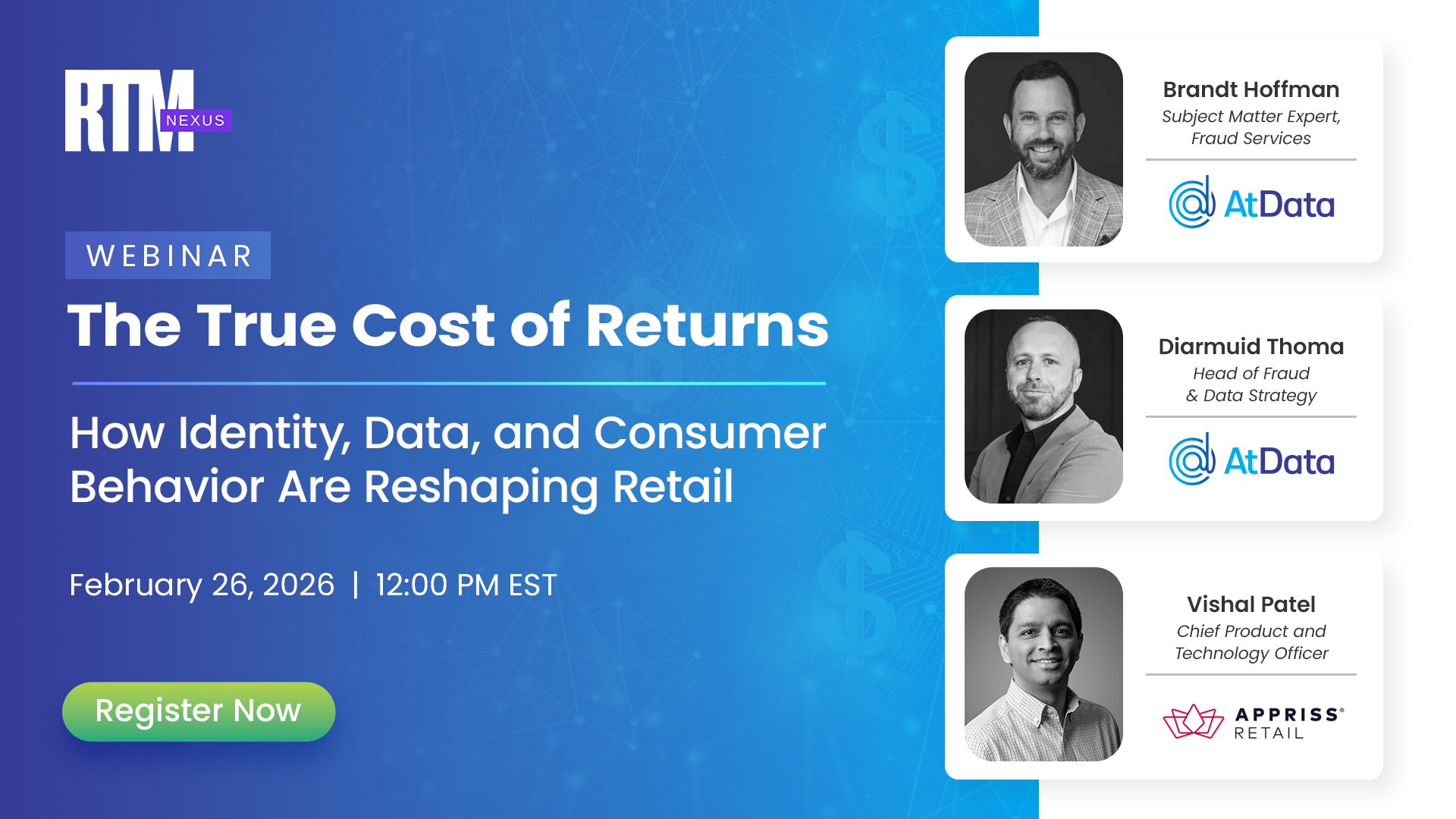
Returns have become a defining part of the modern retail experience—but behind the convenience lies a growing and often misunderstood cost. As ecommerce and omnichannel shopping scale, return abuse and refund fraud have evolved beyond isolated operational issues. They now represent a significant, yet frequently undermeasured, contributor to Total Retail Loss—distorting data, reshaping customer behavior, and quietly eroding margin, loyalty, and brand trust.
In this webinar, we examine the true cost of returns through a new lens grounded in consumer psychology, identity, and data intelligence. Lenient return policies, instant refunds, and anonymous digital interactions have fundamentally changed how shoppers think and behave, blurring the line between loyalty and abuse. What was once dismissed as “friendly fraud” has become culturally normalized—amplified by social media and enabled by fragmented systems across channels.
This session goes beyond traditional fraud prevention models to explore why returns are, at their core, identity events—and why understanding who is returning is just as critical as knowing what is being returned. We’ll discuss how disconnected return processes inflate Total Retail Loss and undermine customer intelligence, and how leading retailers are rethinking accountability without sacrificing experience.
You’ll learn how retailers are using identity and behavioral signals to:
Differentiate high-value customers from abusive behavior
Protect margins while preserving a seamless customer experience
Create consistency and accountability across online and in-store channels
Join us to learn how return data can be transformed into actionable customer intelligence—helping retailers reduce Total Retail Loss, restore trust, improve personalization, and future-proof their business as consumer expectations and fraud tactics continue to evolve.
