

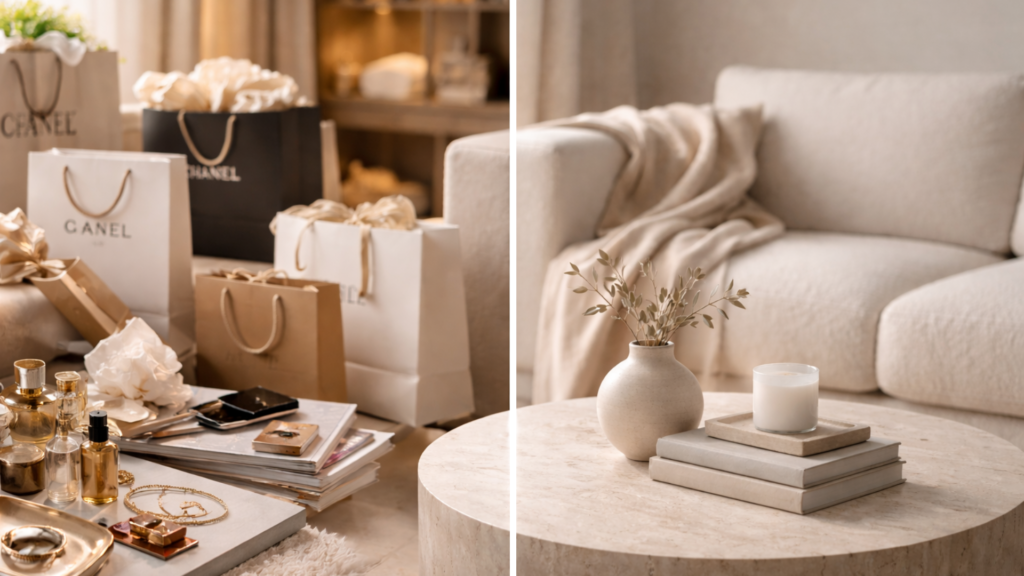
Luxury has changed, even if many luxury brands haven’t.
For decades, luxury was defined by accumulation: more features, more options, more
visibility, more exclusivity layered on top of itself. Luxury meant abundance and
access—something visibly scarce and deliberately elevated above the ordinary.
But those signals no longer land the way they once did.
Modern luxury consumers aren’t impressed by excess. They’re exhausted by it.
They are overwhelmed by choice, saturated by messaging, and worn down by
experiences that demand attention instead of offering relief. In a world where everything
is louder, faster, and more complex, the definition of luxury has quietly inverted.
The new luxury is quiet.
It respects time.
It removes friction.
True luxury today is the absence of unnecessary effort.
And yet, many premium brands are still operating under an outdated playbook. Instead
of subtracting, they add. More touchpoints. More personalization layers. More upsells.
More “experiences” designed to prove value rather than deliver it.
Ironically, this accumulation introduces the very thing luxury is supposed to eliminate:
friction.
Every added choice increases cognitive load. Every additional step creates opportunity
for confusion. Every unnecessary interaction erodes the feeling of ease. What was
meant to feel elevated starts to feel demanding.
Modern luxury brands understand that value is created through subtraction. They
design experiences that feel effortless because they have been deliberately simplified.
They invest in:
- Seamless journeys with fewer decisions and fewer handoffs
- Invisible technology that works reliably without drawing attention to itself
- Service models that anticipate needs instead of reacting to problems
- Consistency across every interaction, not just flagship moments
Luxury is not about making customers feel impressed. It’s about making them feel
confident, calm, and understood.
This shift places new pressure on leadership. Creating effortless experiences is
extraordinarily difficult. It requires discipline, alignment, and a willingness to say no—to
features, channels, and initiatives that dilute the experience.
This is where heritage becomes powerful.
Brands with a clear sense of who they are don’t need to chase trends or constantly
explain themselves. Their identity is embedded in how they operate, not just how they
communicate. Their restraint becomes their signal. Their consistency becomes their
credibility.
Heritage isn’t about nostalgia. It’s about clarity. It provides a filter for decision-making:
does this addition enhance ease, or does it add noise?
The paradox of luxury is that what feels effortless on the surface requires enormous
effort behind the scenes. Precision in training. Investment in systems. A culture that
values judgment over scripts. Alignment between promise and delivery.
Spectacle is easy. Reliability is hard. Anticipation is harder.
For luxury brands navigating this shift, a few principles matter:
- Audit the experience for friction, not just aesthetics
- Reduce choices where confidence matters more than customization
- Empower frontline teams to resolve issues without escalation
- Use technology to disappear problems, not showcase features
- Measure success by repeat behavior and advocacy, not engagement alone
In an era defined by noise, restraint is a differentiator.
In a world of abundance, clarity is rare.
Luxury brands that recognize this evolution will deepen loyalty and relevance. They will
earn trust not by doing more, but by doing less—better.
Those that don’t will continue adding layers, features, and experiences, while quietly
delivering less of what their customers truly value.
And in today’s market, that’s the most expensive mistake a premium brand can make.